
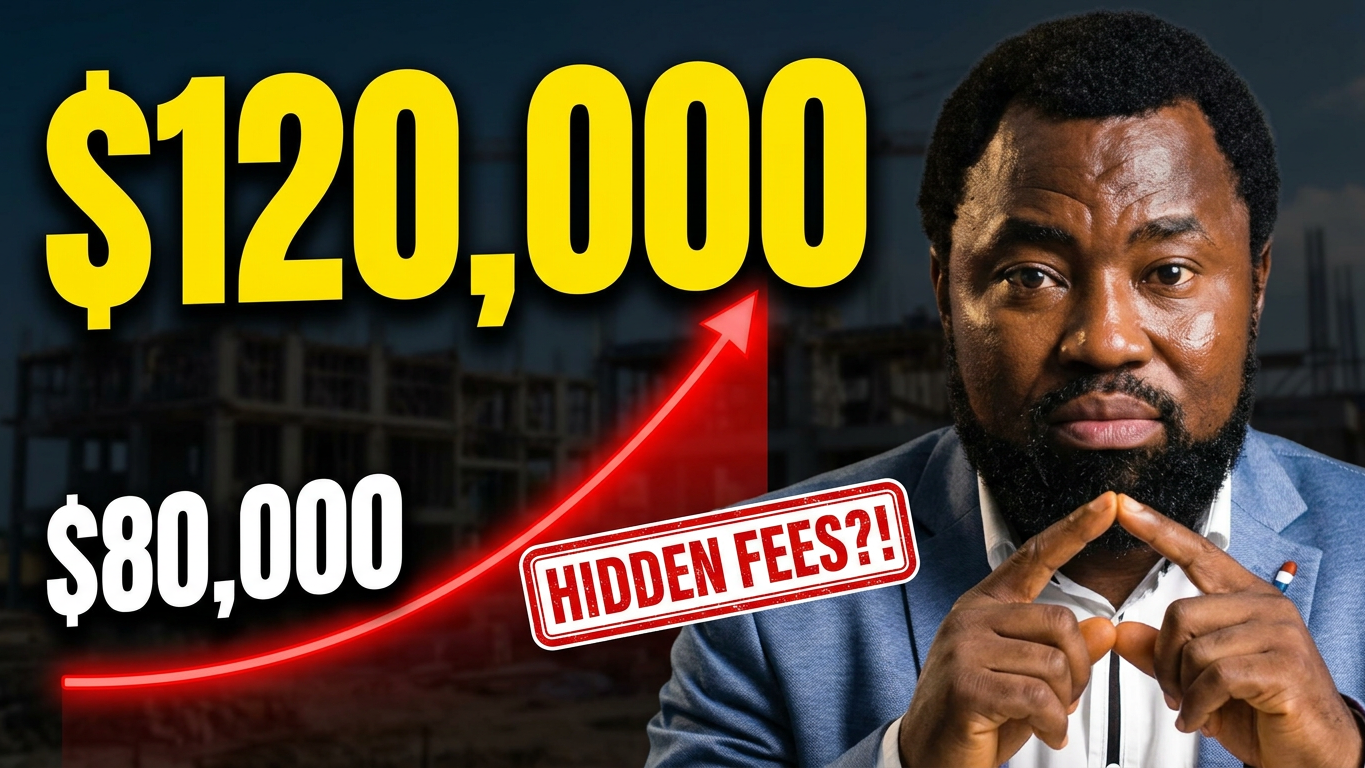
Pay a deposit. Spread the balance. Move closer to owning your dream home.
It sounds straightforward. And when you cannot comfortably pay the full purchase price upfront, an installment plan can make a property feel within reach.
But there is a question that deserves just as much attention as the monthly payment:
What happens if you keep paying, but the developer does not deliver what you agreed to buy?
Before buying property on installment in Ghana, look beyond the deposit, the showroom and the promise of flexible payments. Examine the total cost, the developer’s ability to complete the project, your rights over the property and the conditions for getting your money back.
The problem is not paying in installments. The problem is entering a long-term commitment without understanding who carries the risk when something goes wrong.
Watch the Full Kumadoh Perspective Episode
Explore the topic in the accompanying video, then use this article to identify the questions to ask before signing a property payment agreement.
What Does Buying Property on Installment Mean?
For this discussion, buying on installment means paying the seller or developer in stages rather than paying the entire purchase price at once. Your proposed agreement might include a deposit, regular payments, construction-stage payments or a final lump sum.
Do not confuse the payment arrangement with the construction status.
“Installment” describes how you pay. “Off-plan” describes a purchase made before the property is completed. You should therefore ask two separate questions: What payment obligations am I accepting, and what still needs to happen before I receive the property?
That distinction matters throughout the following checks.
1. A Manageable Deposit Can Hide an Unmanageable Commitment
The deposit is only the beginning of the affordability calculation.
Consider this hypothetical property payment plan:
| Payment item | Illustrative amount |
|---|---|
| Agreed purchase price | GH₵800,000 |
| Initial deposit | GH₵200,000 |
| Remaining balance | GH₵600,000 |
| Repayment period | 24 months |
| Monthly payment | GH₵25,000 |
These figures are illustrative, not a current property quotation. They assume equal monthly payments, with no additional interest, fees or final lump sum.
Having GH₵200,000 available does not answer whether you can comfortably pay another GH₵25,000 every month for two years.
Before committing, test the arrangement against your ordinary income—not your best business month, an expected promotion or a hoped-for property resale.
Also request a complete schedule of additional costs. Ghana’s Lands Commission lists separate charges for services including searches, authentication, stamping and registration. Clarify which costs are included in the seller’s price and which you must budget for separately.
Ask about utility connections, estate charges, documentation expenses and any payment due at handover.
A small deposit does not necessarily mean an affordable property. It may simply mean a larger obligation later.
2. Price-Adjustment Clauses Can Undermine Your Budget
Before signing, ask the developer a direct question:
“Is the total purchase price fixed for the entire payment period?”
Then have your lawyer check whether the written agreement gives the same answer.
Look for wording about construction-cost adjustments, material-price changes, currency movements, variations and additional development charges. Ask what triggers an adjustment, how it is calculated, whether there is a limit and what options you have if the revised amount becomes unaffordable.
Do not assume that a seller’s explanation about rising costs automatically establishes a contractual right to charge you more.
Currency terms deserve particular attention. The Bank of Ghana has warned against pricing, advertising, receipting or making payments for goods and services in foreign currency without the necessary licence or authorisation. A foreign-currency quotation should therefore prompt a legal and compliance check—not just an exchange-rate calculation.
For diaspora buyers, also test your own conversion budget. Even where the agreed payment is fixed in cedis, calculate whether you could still meet it under a less favourable exchange-rate scenario.
The goal is to understand the amount you are committing to, not merely the amount shown in the advertisement.
3. You Could Finish Paying Before the Developer Finishes Building
Imagine making every payment on time, only to discover that your expected move-in date has become another construction update.
To understand the financial impact, consider a simple scenario: a buyer expects to leave rented accommodation but must remain for another 12 months at GH₵4,000 per month. That delay would add GH₵48,000 to the buyer’s housing expenditure.
This is an illustration, not an estimate of typical project delays in Ghana. It shows why the delivery date belongs in your affordability calculation.
Ask your lawyer to examine the completion date, permitted extensions and what happens after a final contractual deadline. That final deadline is sometimes called a long-stop date.
Also clarify what “completion” means. Does it mean your unit is physically finished, or does it include usable access, connected utilities and the documents needed for handover?
Negotiate clear consequences for missed deadlines rather than relying on an informal promise that the developer will “sort you out.”
Do not assume you can safely stop paying whenever construction slows. Get advice on your agreement before withholding an installment.
4. Your Payments May Be Exposed to the Developer’s Financial Problems
A useful question for an off-plan purchase is:
“How will this project be completed if future sales are slower than expected?”
Treat this as a test of the funding plan, not an accusation.
Ask the developer to explain the remaining construction budget, financing arrangements and how buyer payments are managed. Request evidence that your professional advisers can assess, rather than accepting a confident verbal answer.
Explore whether the agreement can provide independently verified construction milestones before payments become due. Where an escrow arrangement is offered, ask your lawyer to examine who controls the account, when money can be released and what happens in a dispute.
Do not stop at the word “escrow.” Understand the actual safeguards.
Also ask what would happen to your payments and property claim if the seller became insolvent. Avoid assuming either that your money is fully protected or that recovery would be impossible; your lawyer needs to assess the specific structure.
The objective is to understand how much money you could have committed before receiving something you can securely own and use.
5. Default and Refund Terms May Be More Important Than the Sales Pitch
Before asking, “How soon can I reserve the property?”, ask:
“What happens if I need to leave this agreement?”
Have your lawyer review the notice required for missed payments, any grace period, late-payment charges, termination provisions and proposed deductions from refunds.
Then examine the refund process itself.
Ask whether repayment has a fixed deadline, whether deductions are clearly calculated and whether the seller proposes to refund you only after finding another buyer.
That last condition deserves careful consideration. In a hypothetical agreement that makes your refund dependent on resale, your access to the money would depend on an event you do not control.
Keep two situations separate: cancellation because you can no longer pay, and cancellation because the developer has failed to perform. Ask your lawyer to assess your position in each scenario.
Do not assume that cancellation guarantees a full refund. Equally, do not assume that every forfeiture clause is legally decisive simply because it appears in the document.
Understand the cost and process of leaving before you commit to staying.
6. Regular Payments Do Not Replace Land and Ownership Checks
A payment schedule tells you when money is due. It does not answer whether the seller has the necessary rights over the property.
Ghana’s Lands Commission lists official search, land-certificate authentication and registration services. These are relevant checks to discuss with your independent property lawyer before committing funds.
Ask your lawyer and surveyor to investigate the exact land or unit, the seller’s authority, the supporting documents, boundaries and any relevant competing claims or existing charges.
For leasehold property, request an explanation of the remaining term and the rights you would receive. For an apartment, clarify your rights over the unit, common areas, parking and access.
Do not treat an attractive site plan as a substitute for verifying what is being sold.
Keep registration in view as well. The Lands Commission’s deed-registration requirements include an executed instrument, supporting documents and an approved plan; payment receipts alone should not be treated as completed registration documentation.
Ask for a written explanation of when possession is delivered, which ownership documents you will receive and who is responsible for progressing registration.
7. The Finished Property May Not Match Your Expectations
Before committing, compare the sales presentation with the actual contract.
Does the agreement specify the unit’s floor area, layout, finishes, fittings, parking allocation and included infrastructure? Are the features that influenced your decision written into the agreement, or are they only visible in a brochure?
Ask what happens if the developer proposes a different material, changes the layout or delivers a smaller space. Have your adviser assess how variations require approval and how disagreements will be handled.
For estate developments, distinguish your home’s handover from the delivery of shared facilities. Request separate, clear commitments for roads, drainage, water, power and any advertised amenities.
Arrange independent inspection at appropriate stages and before accepting handover. Agree in advance how defects will be recorded, who must correct them and the timeframe for doing so.
Your goal is not simply to receive a building. It is to receive the property and specifications you agreed to buy.
8. You May Have Less Freedom to Resell Than You Expect
Do not build your repayment strategy around the assumption that you can easily sell your interest before completion.
Ask whether the agreement allows you to transfer your purchase rights to another buyer. This is often described as assignment.
Request clear answers about consent, fees, outstanding-payment requirements and whether the incoming buyer must meet specific conditions. Have your lawyer assess those provisions before signing.
Then test the economics using a conservative scenario: no increase in value, a longer-than-expected search for a buyer and transaction costs that reduce what you recover.
An exit plan should still make sense without guaranteed appreciation.
For property investment in Ghana, distinguish between an asset you hope will become valuable and money you can actually access when you need it.
How to Check the People Behind the Property Deal
Start by identifying the exact legal entity selling the property and confirming who is authorised to sign on its behalf. Ask your independent lawyer to verify those details.
Where a real estate broker, agent or brokerage firm is involved, check their licence through the Real Estate Agency Council’s public register. REAC provides a licence-verification service for these practitioners under the Real Estate Agency Act, 2020.
Treat this as one check, not a replacement for investigating the property or the development.
Request completed-project references and speak with previous buyers where possible. Ask about actual handover dates, documents received, unexpected charges and how defects were handled.
For buyers living abroad, appoint an independent local professional who reports directly to you. Specify what they must inspect and verify; a general progress video is not the same as a documented assessment of your particular unit.
When Can an Installment Property Purchase Make Sense?
An installment arrangement deserves consideration when the payment schedule fits your finances, the property and seller have passed independent checks, and the contract gives you an acceptable balance of obligations and protections.
Assess the purchase under an unfavourable scenario—not only the advertised one.
Could you cope with a delay? Could you meet the payments without expected rental income from the unfinished unit? Would the purchase still make sense without a rapid increase in value?
You do not need a perfect prediction of the future. You need to know which risks you are accepting and whether you can carry them.
Frequently Asked Questions
Is buying property on installment in Ghana safe?
Do not judge safety by the payment method alone. Assess the seller, property rights, construction status, funding arrangements and contract. A flexible payment plan should not replace independent checks.
Can a developer increase the price after I start paying?
Have your lawyer examine the price clause, any adjustment mechanism and the legal basis for the proposed increase. Request the calculation and justification in writing rather than accepting a verbal demand.
Will I receive a refund if I cancel?
Do not assume a particular refund amount or deadline without reviewing the agreement and circumstances. Ask your lawyer to distinguish cancellation caused by your inability to pay from cancellation arising from the seller’s failure to perform.
What should I do if the project stalls?
Keep the agreement, receipts, correspondence and dated progress records. Seek legal advice before withholding payments, accepting revised terms or signing a cancellation document.
Where the issue concerns real estate agency misconduct within its remit, REAC also provides a complaints channel. A regulatory complaint should not be treated as a substitute for advice about your contractual claim.
Final Thoughts: Buy the Property, Not Just the Payment Plan
Buying property on installment in Ghana should begin with more than one question.
Not just: “Can I afford the deposit?”
But also: “Can I afford the full commitment? What exactly am I buying? When will I receive it? And what happens if either party cannot fulfil the agreement?”
An attractive monthly payment cannot answer those questions for you.
Before you pay for the promise of a home, understand the evidence behind the promise—and the agreement protecting your money.
Watch the full episode and subscribe to Kumadoh Perspective for more discussions about real estate, business and investment in Ghana.
Would you buy an unfinished property on installments, or would you prefer a completed home? Share the condition that would matter most to your decision.
This article provides general educational information, not individual legal or financial advice. Have a Ghana-qualified property lawyer review your specific transaction before signing or paying a deposit.