
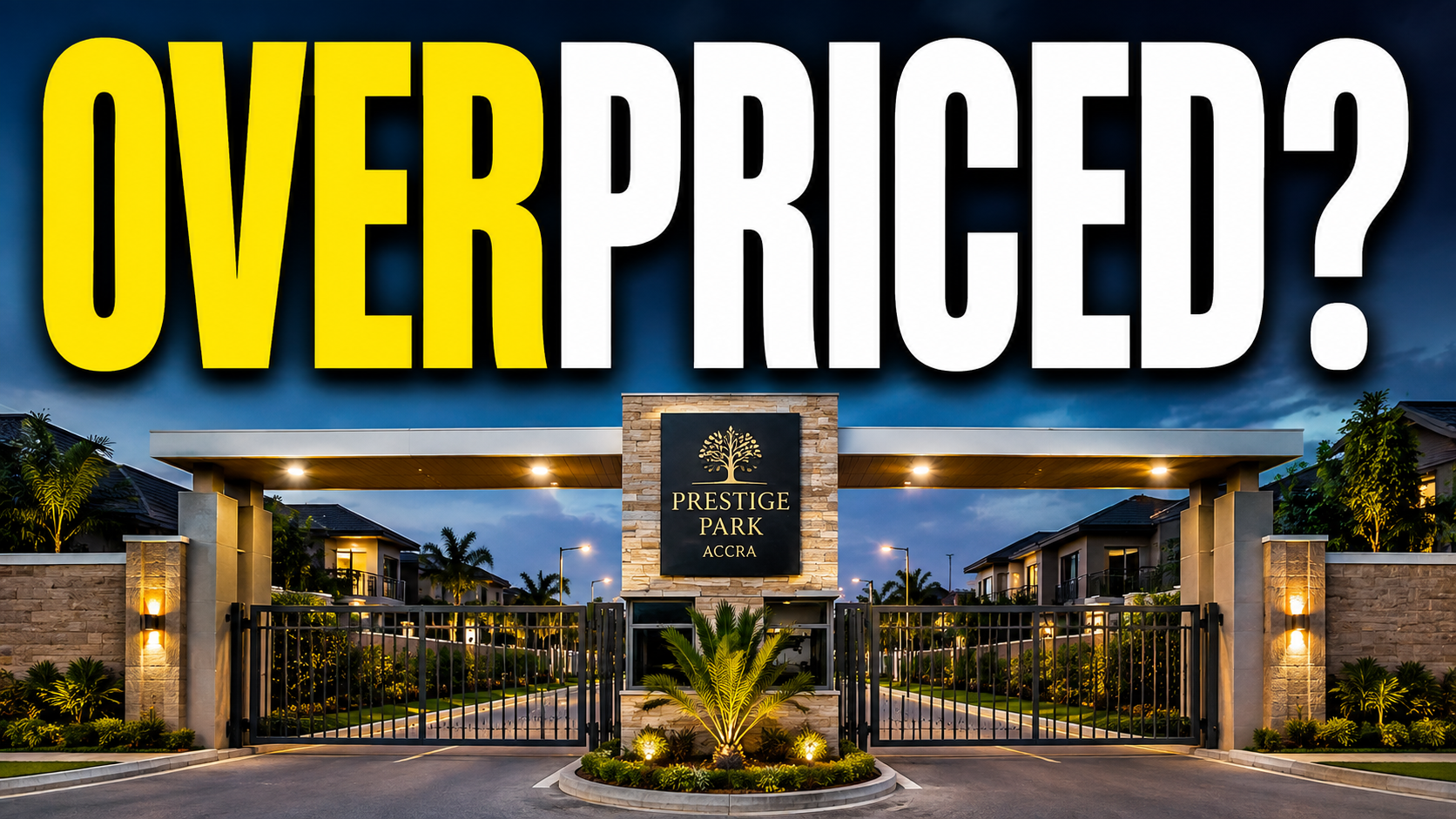
Imagine driving through an impressive entrance into a beautifully presented estate. The streets look organised, the landscaping is attractive, and the homes have that polished appearance you have been searching for.
You can already picture your family living there.
But before you pay a deposit, ask yourself one important question:
Are you paying for a genuinely better property—or paying a premium for how the property makes you feel?
When comparing gated communities in Ghana, the appearance of an estate should be the beginning of your assessment, not the conclusion. You need to understand the house, the services, the ongoing financial commitments and the conditions attached to ownership.
The point is not that gated communities are bad. It is that a good-looking home and a good investment are not automatically the same thing.
This guide explores the central questions from the Kumadoh Perspective episode, helping you look beyond the entrance gate before making your decision.
Watch the Full Kumadoh Perspective Episode
Watch “Before You Buy in a Gated Community in Ghana, Watch This!” for the discussion on estate living, service charges and the value buyers should question before committing.
What Are You Actually Paying for in a Gated Community?
Start by separating the value of the house from the value of the estate around it.
Your assessment should consider the land interest being transferred, usable floor area, construction quality, location and condition of the property. Then examine what the wider development adds: access control, shared infrastructure, communal facilities and estate management.
There is research behind the idea of a gated-community premium. A study published online in Housing Studies in 2020 found that gated properties in its Accra sample commanded higher selling prices than comparable non-gated properties. The authors linked those premiums to factors including housing services, prestige and security considerations. These are historical findings, not a current price guide for any particular estate.
A premium, however, is not automatically proof of overpricing.
Paying more could make sense when the additional services solve problems you would otherwise spend time and money managing yourself. The important question is whether those benefits are real, reliable and worth the difference in price.
Compare properties with similar locations, sizes, specifications and ownership terms. A small house in a managed estate and a larger standalone property several kilometres away are not directly interchangeable.
Ask what the additional money buys—not simply whether the address sounds more prestigious.
Service Charges: The Cost Beyond the Purchase Price
Before buying a house in a gated community in Ghana, request a written explanation of the service charges.
These recurring fees can cover services such as security, communal cleaning, landscaping, refuse collection and shared infrastructure. The scope varies by development, so a charge from one estate should not be treated as a reliable benchmark for another. Ownkey’s guide to estates in Accra and Tema specifically cautions that its published charge ranges are estimates and advises buyers to obtain current schedules directly from estate management.
Do not stop at asking, “How much is the monthly fee?”
Find out what is included, what is billed separately, how charges can change and whether additional contributions may be requested for major repairs. Ask who approves the budget and how residents receive information about expenditure.
Also establish whether your payment obligations continue when the property is vacant or you are living abroad.
For a diaspora buyer using the home only occasionally, this deserves particular attention. A house can be unoccupied while still creating financial obligations.
The right affordability question is not just:
“Can I buy this property?”
It is:
“Can I comfortably own and maintain this property over the years?”
Security: Look Beyond the Gatehouse
Security deserves serious consideration. But an impressive gate is not, by itself, a complete security assessment.
During your viewing, ask how visitor access works, how deliveries are handled, what happens overnight and how the estate responds to an incident. Establish who manages the security team and how residents raise concerns.
Speak to existing residents where possible. Ask about their actual experience rather than relying entirely on a sales presentation.
Then consider the wider journey. What is the access route like after dark? Can emergency vehicles reach the property? Are there practical arrangements for medical emergencies or fire response?
You do not need to dismiss the value of controlled access. You need to understand what it means in practice.
Pay for a functioning security service, not an assumption that a wall removes every risk.
Inspect the House, Not Just the Show Home
A beautifully furnished show home can help you imagine a lifestyle. It should not replace an assessment of the property you are purchasing.
Arrange an independent inspection appropriate to the building’s condition and stage of construction. Ask the inspector to examine matters such as visible defects, drainage, roofing, plumbing, electrical installations, ventilation and workmanship.
Compare the inspection findings with the developer’s written specifications.
Is the kitchen you saw included? Are the air conditioners, wardrobes, water-storage systems and external works part of the agreed price? Are you buying the same finish level as the display property?
For an off-plan purchase, ask your lawyer to review how completion, specification changes, defects and delays are addressed in the contract.
Your goal is to replace assumptions with documented information.
A premium address cannot compensate for a home that fails to meet your practical needs.
Are You Paying for Amenities You Will Actually Use?
A swimming pool, gym, clubhouse or landscaped recreation area can make a development attractive. But assess each facility against your lifestyle or your intended tenant’s needs.
Will you use it regularly? Is it already operational? Is access included in the service charge, or does it require a separate payment?
Distinguish clearly between facilities you can inspect today and facilities shown only in a proposed master plan.
For anything promised in a future phase, ask what the contract commits the developer to deliver, when it should be completed and what happens if plans change. Have those provisions reviewed before relying on them.
For an investment property, the question is slightly different: will the intended tenant pay enough extra for those amenities to justify their cost?
A feature can make an excellent brochure photograph without making an equally valuable contribution to your ownership experience.
Read the Estate Rules Before You Commit
Before buying, obtain the estate’s management agreement and applicable rules.
Ask whether there are conditions affecting extensions, exterior alterations, parking, pets, visitors, home businesses or short-term rentals. Do not assume that owning the property automatically means every intended use is permitted.
For example, a buyer planning to operate a holiday rental should confirm that this use is allowed before calculating potential income.
Someone planning a future extension should establish the approval process before deciding that the house can grow with their family.
Also ask who manages the estate over the long term. Will the developer remain in control? Is there a residents’ association? How are disagreements addressed, and how can management decisions be challenged?
These are not minor details to investigate after moving in. They help determine whether the property fits the life or business you intend to build around it.
Resale Value: Could You Be Competing With the Developer?
Before buying a property, think about how you might sell it.
Consider this scenario: you decide to move on, but the developer is still selling new homes within the same estate. Those homes are offered with fresh finishes, different layouts or payment plans you cannot provide.
What would persuade a buyer to choose your property instead?
This does not mean resale will necessarily be difficult. It means you should investigate the competition rather than assuming that an attractive estate guarantees an easy exit.
Ask about completed resales, not just asking prices. Find out whether comparable properties have actually sold and what made them attractive to buyers.
Also examine future phases. Where will additional homes be built? Could construction affect the outlook, access or privacy that persuaded you to buy?
Your purchase should make sense as a home today and as a property someone else may want tomorrow.
Rental Income: Calculate the Return After Costs
For anyone considering real estate investment in Ghana, a prestigious address is not a substitute for an income calculation.
The Accra study discussed earlier also found rental premiums for gated properties in its sample. However, higher rent alone does not establish a higher investment return: the acquisition price and ownership expenses must also be considered.
Consider this illustrative example, not a current market valuation or rental forecast:
| Item | Illustrative amount |
|---|---|
| Property purchase price | $300,000 |
| Monthly rent when occupied | $1,500 |
| Annual rent with 12 occupied months | $18,000 |
| Gross annual yield on purchase price | 6% |
That 6% is before expenses and assumes full occupancy.
Now suppose the property is occupied for 11 months, producing $16,500 in rent. Assume a further $4,500 in annual operating costs that the owner cannot recover from the tenant.
The remaining operating income would be $12,000, equivalent to 4% of the purchase price.
This simplified calculation excludes financing costs, taxes, acquisition expenses and major capital replacements. Your actual assessment should use the full acquisition cost and the specific expenses attached to the property.
The lesson is straightforward: calculate what you keep, not just what you collect.
Before relying on a rental projection, ask for evidence of achievable rents, identify your likely tenants and test what happens when occupancy is lower or expenses are higher than expected.
Verify the Ownership Documents Independently
Do not let the presentation of an estate replace legal due diligence.
Engage an independent Ghanaian property lawyer to review the seller’s authority, the interest being transferred, the relevant land documents, registration position and appropriate searches. Where a lease is involved, understand its remaining term and applicable conditions.
The Lands Commission publishes public guidance on understanding its search reports. Make sure you obtain and understand the relevant information rather than treating the existence of a document as sufficient reassurance.
Also check the credentials of the professionals facilitating the transaction. Ghana’s Real Estate Agency Council regulates real estate agency practice, including the registration and licensing of brokers and agents. Verify the relevant licensing position rather than relying solely on a business card or social-media profile.
Legal review and physical inspection answer different questions. You need both: whether the transaction properly transfers the intended rights and whether the property meets the agreed standard.
When Buying in a Gated Community Can Make Sense
A gated-community home may be a sensible choice when its services match your priorities and the ongoing costs fit your budget.
For a family, the value may lie in the living environment. For a professional or retiree, it may be the convenience of shared management. For a diaspora buyer, it may be having an organised arrangement for looking after the estate while abroad.
For an investor, the case should rest on evidence of tenant demand and realistic returns—not an assumption that corporate tenants will automatically appear.
Compare that option with buying a standalone home or purchasing land and building.
A standalone property does not become cost-free simply because there is no estate service charge. You still need to budget for its maintenance, security arrangements and other responsibilities. Likewise, a self-build comparison should account for the land, professional services, infrastructure, construction, supervision and contingency—not just a contractor’s headline estimate.
The better option is the one that meets your needs at a total cost you understand and can sustain.
Frequently Asked Questions About Gated Communities in Ghana
Are gated communities in Ghana worth the money?
They can be. Assess the specific property, services, management arrangements and total ownership cost. A higher price is easier to justify when the benefits are useful, documented and consistently delivered.
What should I ask before buying a gated-community home?
Ask for the full purchase terms, service-charge schedule, estate rules, property specifications and management arrangements. Commission independent legal checks and a suitable inspection before committing.
Is a gated-community house better than buying land and building?
Neither option is automatically better. Compare fully completed alternatives, including the time, responsibilities and costs involved. The right decision depends on your budget, intended use and ability to manage the property or construction process.
Final Thoughts: Buy the Value, Not Just the Gate
Before buying in a gated community in Ghana, look beyond the polished entrance and the promise of an exclusive lifestyle.
Understand what you are acquiring, what you will continue paying for and what happens when you need to rent, alter or sell the property.
Security, convenience and well-managed surroundings can be worth paying for. But those benefits should be examined, not imagined.
The question is not whether gated communities are good or bad.
The question is whether this particular property offers enough value to justify its price—for you.
Otherwise, you could end up buying a very expensive fence.
With a $300,000 budget, would you choose a gated-community home or buy land and build? Share what would influence your decision, and subscribe to Kumadoh Perspective for more conversations about real estate, business and investment in Ghana.
This article provides general educational information. Obtain independent legal, property-inspection and financial advice appropriate to the transaction before making a commitment.