
By Uriah Kumadoh | Kumadoh Perspective
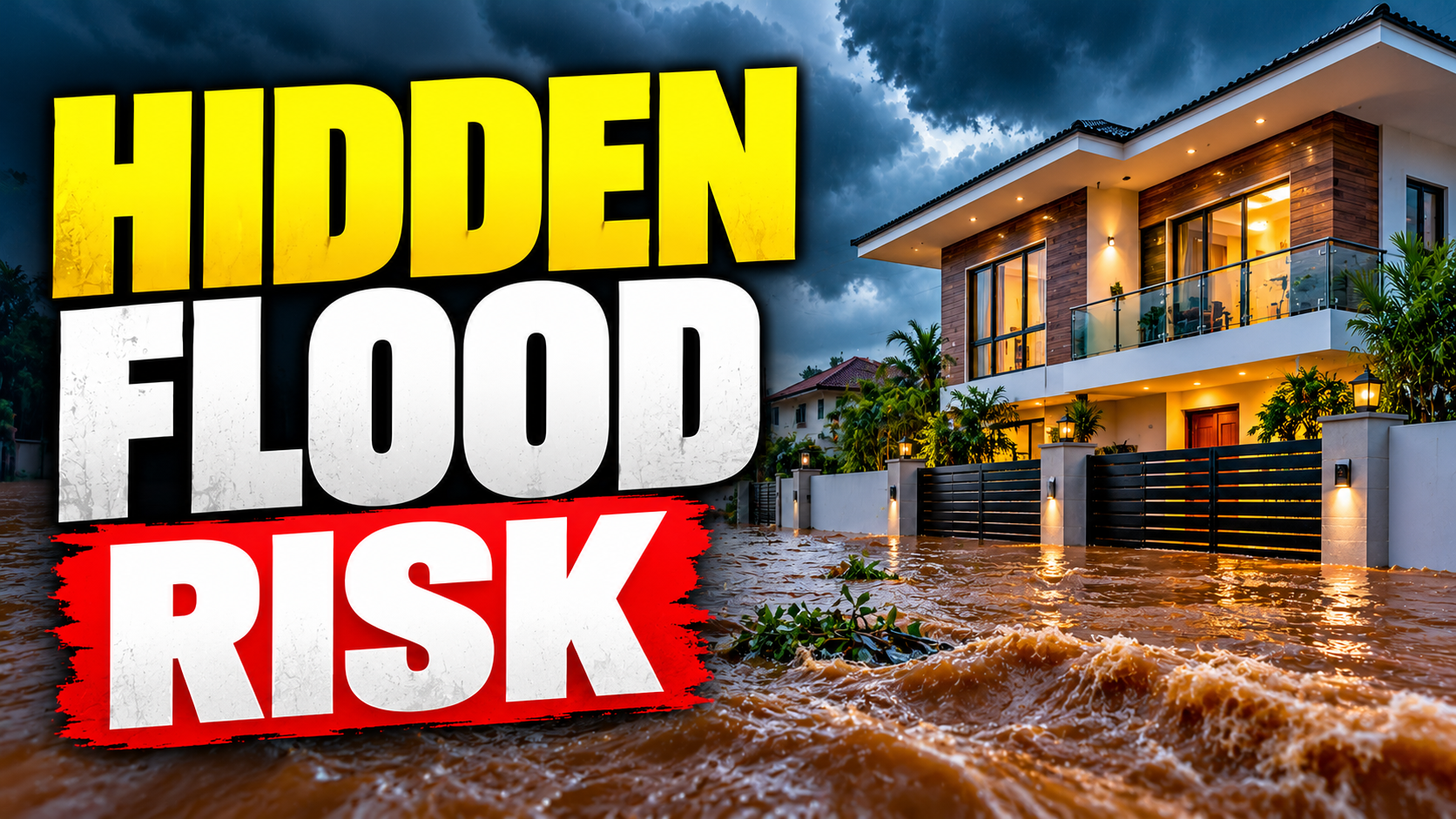
Buying a house is one of the most important financial decisions many Ghanaians will ever make. Yet a property that looks beautiful during an inspection may conceal a serious problem: a history of flooding.
Imagine purchasing a modern house in Accra, completing all the legal documentation, and moving in with your family. The building appears sound, the compound is attractive, and the neighbourhood looks peaceful.
Then the rainy season arrives.
Heavy rainfall overwhelms the surrounding drainage system, water enters the property, and the owner faces costly repairs.
The most troubling part is discovering that the seller may have known about previous flooding but never mentioned it during negotiations.
This raises an important question for Ghana’s property market.
Should sellers be legally required to disclose known flood risks before a buyer commits to purchasing a house?
The Hidden Financial Risk of Flood-Prone Properties
Many property buyers focus primarily on location, price, documentation, architectural design, and construction quality.These are essential considerations, but flood exposure also deserves serious attention.
A property in a flood-prone location can create significant financial difficulties, even when its construction is otherwise satisfactory.
Recurring flooding can result in damaged furniture, electrical repairs, deteriorating walls, drainage expenses, and interruptions to everyday living.
Buyers may also face difficulties selling the property in the future if prospective purchasers become concerned about its flood history.
The problem becomes more complicated when the buyer purchased the house with borrowed funds.
A mortgage or other financial obligation does not disappear simply because the property experiences flooding.
This makes flood risk an important part of property valuation and investment due diligence.
Why Property Inspections May Not Reveal Flood Problems
One of the biggest challenges in Ghana’s real estate market is that buyers often inspect properties when weather conditions are favourable.
During the dry season, drainage channels may appear sufficient, compound surfaces may be completely dry, and nearby roads may look perfectly accessible.
However, these conditions may change significantly during the rainy season.
A property could have experienced several flooding incidents without showing obvious signs during a carefully prepared inspection.
Sellers may have repaired damaged areas, repainted walls, or upgraded sections of the compound.
Such repairs are not automatically evidence of deception. Nevertheless, buyers should investigate unusual water damage and ask clear questions about previous flooding.
The seller’s knowledge of the property is often considerably greater than the buyer’s, particularly when the seller has occupied it for many years.
This imbalance creates a strong argument for clearer property disclosure requirements.
WATCH FULL VIDEO
What Does Ghana’s Real Estate Law Say?
Ghana already has legislation addressing real estate transactions and the responsibilities of licensed property professionals.
The Real Estate Agency Act, 2020 (Act 1047), regulates real estate agency practice and provides rules concerning transaction documentation, professional conduct, and property information.
Under Section 31, a licensed agent or broker’s failure to disclose information about a property may be a ground for licence revocation.
Section 42 also recognises disclosure forms concerning defects or health hazards as part of the statutory transaction-form framework.
These provisions demonstrate that transparency is already an important part of Ghana’s real estate regulatory system.
However, they should not be interpreted as automatically creating a specific criminal offence for every private homeowner who fails to volunteer information about flood risk.
Ghanaian property law continues to place considerable emphasis on buyer due diligence, while fraud and misrepresentation may give rise to legal remedies.
The policy question is whether existing protections provide sufficiently clear and practical safeguards against the deliberate concealment of flood history.
The Real Cost of Flooding in Ghana
Flooding is not a hypothetical concern for Ghana’s property market.
The World Bank reported that the June 2015 flood event in Accra affected approximately 53,000 people and caused substantial damage to housing, transportation, water infrastructure, and sanitation facilities.
The same report identified urban development in vulnerable areas, inadequate drainage systems, and waste accumulation as important contributors to increasing flood risk.
Ghana’s investment in flood mitigation through the Greater Accra Resilient and Integrated Development Project further demonstrates the seriousness of the problem.
But while public investment in drainage infrastructure remains essential, buyers also need access to reliable information about individual property risks.
Government flood-control measures and private-market disclosure requirements can complement each other.
Should Selling a Flood-Prone House Be Illegal?
The important distinction is between selling a property that carries flood risk and deliberately concealing material information about that risk.
A property located in a flood-risk area should not automatically be prohibited from being sold.
Buyers may reasonably decide to purchase such properties when they understand the risks, the price reflects the circumstances, and appropriate mitigation measures are available.
The more serious concern arises when a seller knowingly misrepresents the property’s history.
Consider a homeowner whose property has experienced repeated flooding.
If the homeowner is asked about previous flooding and deliberately provides false information to secure a transaction, the buyer may make a costly financial decision based on deception.
That conduct deserves greater scrutiny than a situation in which an owner genuinely has no knowledge of previous flooding.
A fair legal framework should distinguish between honest uncertainty, negligent statements, and deliberate fraud.
Should Developers Be Required to Disclose Flood Risks?
The responsibility should not rest entirely with individual homeowners.
Property developers can have access to detailed information about land conditions, site levels, drainage designs, and construction plans.
When developers build residential estates in low-lying areas, buyers should be informed of known material flood exposure and the measures adopted to manage it.
Raising a building’s foundation may reduce the likelihood of water entering the living areas, but it does not necessarily eliminate flooding on access roads or neighbouring land.
A house can remain dry while its residents are effectively cut off from surrounding roads and services.
For that reason, assessments should consider the broader development site and not simply the finished building.
Transparent flood-risk disclosure could improve consumer confidence while encouraging better construction and planning practices.
A Practical Solution: Mandatory Flood Disclosure Statements
Ghana could consider introducing a standard property flood disclosure statement as part of residential property transactions.
The statement should require sellers to identify known material risks, including:
- Previous flooding affecting the house or compound.
- Known recurring flooding on access roads.
- Flood-related repairs carried out during their ownership.
- Available professional assessments or official flood warnings.
- Known drainage restrictions or significant unresolved drainage problems.
The disclosure should distinguish the seller’s personal knowledge from an independent professional risk assessment.
A seller should not be required to guarantee that a property will never flood.
Instead, sellers should be expected to provide accurate information about material facts they genuinely know.
The system should also include proportionate consequences for knowingly false statements and practical ways for buyers to pursue remedies.
Five Ways to Protect Yourself Before Buying Property in Ghana
1. Investigate the Property During the Rainy Season
Where practical, visit the property after heavy rainfall. Examine the drainage system, surrounding roads, and how rainwater moves through the neighbourhood.
2. Speak to Neighbours
Long-term residents may have useful information about previous flooding incidents, drainage problems, and accessibility during periods of intense rainfall.
Neighbour accounts are helpful, but they should be checked against other available evidence.
3. Look for Signs of Water Damage
Inspect walls, doors, flooring, skirting, external finishes, and low-lying parts of the compound.
Repainting alone does not prove that a property has flooded, but unexplained damage warrants further investigation.
4. Seek Professional Advice
A qualified surveyor, engineer, or relevant flood-risk specialist can assess site conditions and help identify potential concerns.
The Ghana Hydrological Authority and relevant local planning authorities may also be useful sources of available flood and drainage information.
5. Ask for Written Representations
Before completing the purchase, ask the seller or developer to provide written responses about known flood history, relevant repairs, and drainage problems.
Obtain independent legal advice on how important representations should be documented in the property transaction.
Should Buyers Have the Right to Compensation?
Where a seller deliberately misrepresents material flood information, affected buyers should have access to effective legal remedies.
Depending on the circumstances and applicable law, those remedies could involve damages or the possibility of setting aside the transaction.
However, liability should depend on evidence and clearly defined legal standards.
A property experiencing flooding after its sale should not automatically prove that the previous owner committed fraud.
The objective should be accountability for deception rather than punishment for unpredictable weather.
Conclusion: Ghana Needs Greater Transparency in Property Transactions
Ghana’s real estate sector depends on trust.
Buyers need confidence that the information provided during property transactions is reasonably accurate.
Sellers deserve fair rules that do not impose impossible guarantees about future environmental conditions.
Developers and real estate agents also have a role in helping buyers understand important property risks.
Making known material flood risks subject to clearer disclosure requirements could strengthen trust, encourage professional standards, and protect buyers from avoidable financial losses.
Ultimately, the question is not whether flood-prone properties should be sold.
It is whether people should be allowed to conceal known material risks when selling them.
What is your opinion?
Should Ghana make flood-history disclosure mandatory for residential property sales?
And should sellers who deliberately conceal serious flood problems be liable to compensate affected buyers?
Share your perspective in the comments.
For more conversations about real estate, business, and investment opportunities in Ghana and Africa, follow Kumadoh Perspective at www.kumadoh.com.