
By Uriah Kumadoh | Kumadoh Perspective
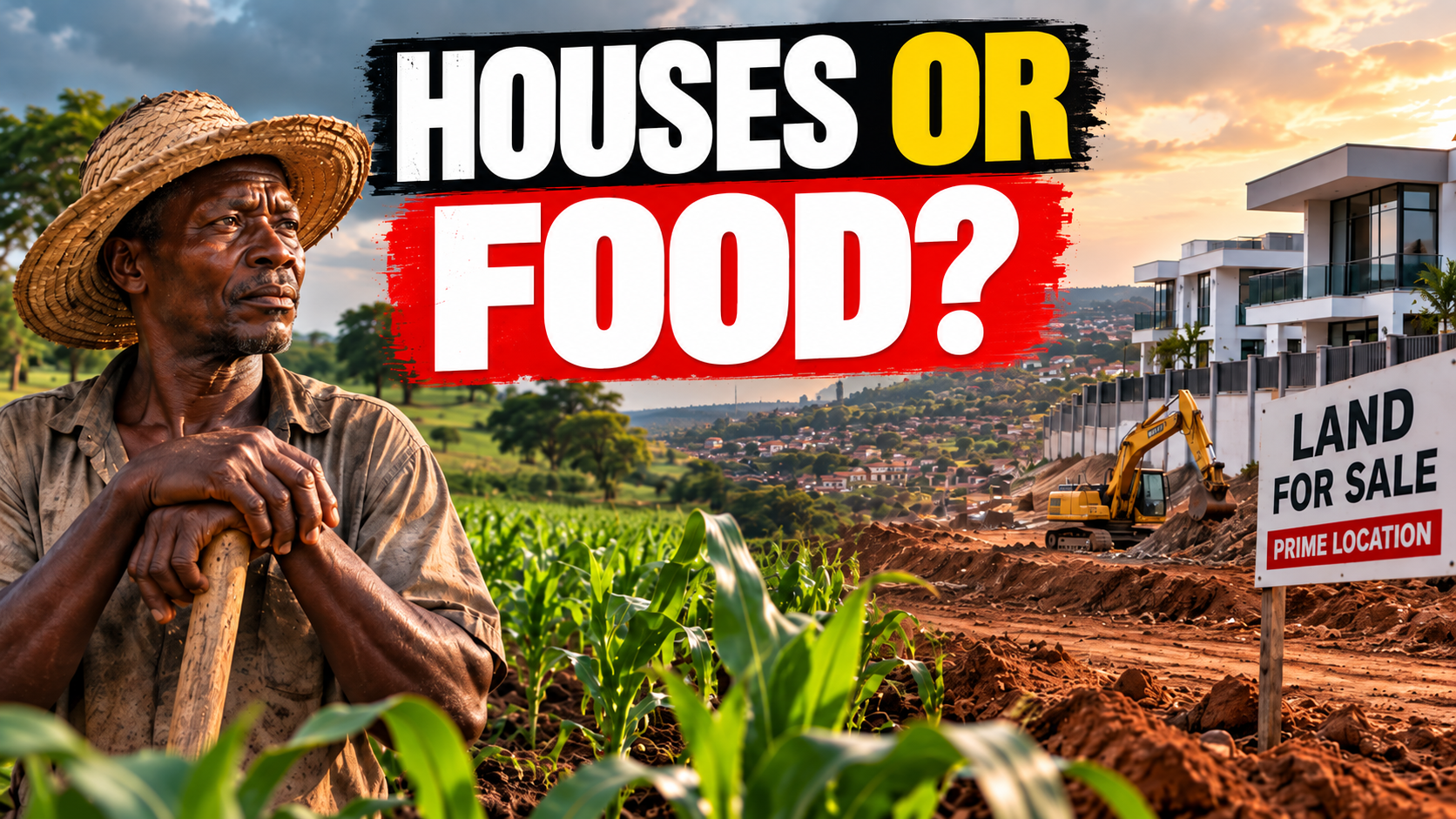
An estate developer looks at farmland and sees a hundred houses. A farmer sees the next harvest. The landowner sees an opportunity to change the family’s financial future. All three are looking at the same land, but they are imagining very different possibilities.
Who should decide what that land becomes?
The debate over agricultural land in Ghana is not simply a battle between farmers and developers. It involves housing, livelihoods, ownership, investment and the difficult question of whose needs should take priority. People need somewhere to live, but those same people also need dependable access to food. Landowners deserve opportunities to improve their finances, yet the effects of a land sale may reach beyond the people receiving the payment.
The question is not whether Ghana should choose houses or food. It is whether we are thinking carefully enough about where we build, what we replace and who carries the consequences.
Why Selling Farmland Can Be a Rational Decision
Imagine a family that has cultivated land on the edge of a growing town for years. Some harvests have been profitable; others have barely covered their expenses. Now there are school fees to pay, ageing relatives to support and equipment that needs replacing. A developer arrives with an offer that could clear the family’s debts and provide a financial cushion they have never had before.
It is easy to tell that family to preserve its farmland when you are not responsible for its bills. It is harder to explain why it should reject a substantial payment without offering a credible alternative. From the family’s perspective, selling may not be an act of carelessness. It may be a practical response to financial pressure and uncertainty.
Any serious discussion about farmland preservation in Ghana must begin here. Asking landowners to protect agriculture is not enough; continued agricultural use must offer a reasonable prospect of supporting the people involved. Can the farm cover its costs? Can the household withstand a difficult season? Is there someone willing and able to continue the work?
Protecting agriculture should not mean expecting farmers to remain financially vulnerable for everyone else’s benefit. A farmer deserves the opportunity to prosper, not simply praise for helping to feed the country.
Watch Full Video here
The Person Selling the Land May Not Be the Person Farming It
Now consider a different situation. A family owns the land, but another household cultivates it under an arrangement with the owners. A trader regularly purchases the harvest, and local workers earn income during planting and harvesting. When the land is sold for residential development, the owners receive the payment—but several other people may face a sudden change in their livelihoods.
What happens to the household growing the crops? Can it harvest what has already been planted? Does it have access to another suitable site? What happens to the workers and traders whose activities depended on that farm? The answers will vary with the circumstances and the arrangements involved, which is precisely why they deserve attention before the land changes use.
This does not mean every farmland sale is unfair or every development project is harmful. The owners may benefit, the developer may create a successful project, and buyers may acquire homes they genuinely need. But those benefits do not automatically resolve the difficulties experienced by everyone else.
A profitable transaction and a broadly beneficial outcome are not necessarily the same thing. When we discuss development, we should ask not only who receives the money, but also who gains an opportunity and who has to start again.
Food Security Is About More Than the Next Harvest
Selling one farm does not prove that Ghana is facing a national food-security crisis. It would also be misleading to attribute every rise in food prices to residential development. The issue deserves a more careful argument than that.
Consider the farming household in our example. After losing access to its land, it may still find food available in the local market. However, if farming provided its main income, its ability to purchase that food may have weakened. In another version of the same situation, the household might receive a fair settlement, establish a stronger livelihood and become better able to meet its needs. The outcome depends on what actually follows the conversion.
This is why the conversation should examine both production and people’s ability to obtain food. When agricultural land is converted, what replaces its output? When a livelihood disappears, what replaces that income? Are those replacements realistic, adequately supported and available when people need them?
The point is not that every new house creates hunger. It is that the consequences of replacing a working farm should be understood rather than dismissed with the assumption that everyone will eventually manage.
“Farmers Can Move Somewhere Else” Is Not a Complete Answer
One response to concerns about farmland conversion is that farmers can relocate. Sometimes relocation may be a sensible option. But it should be treated as a practical undertaking, not a sentence that ends the discussion.
Imagine offering a farmer another piece of land. Before calling that a solution, there are questions to answer. Can the farmer use it securely? Is water available? Is it suitable for the intended crops? How much preparation does it require? Can buyers reach it? Who covers the cost of moving, and how will the household support itself before the new farm produces an income?
There is also the question of what the replacement land already provides. Does another household depend on it? Would preparing it for farming displace another activity or create a different problem? An area that looks unused to an outsider is not necessarily free of existing interests or value.
None of this means every cultivated field must remain a farm forever. It means the decision should consider the particular site, its productive potential and the alternatives available. Pointing to another area on a map is the beginning of an assessment—not the completion of one.
Ghana Needs Housing, but a Sold Plot Is Not a Completed Home
The case for housing deserves the same serious attention as the case for agriculture. Imagine a young family that has spent years in overcrowded accommodation and finally finds a home within its budget. Its need is real. It would be unfair to treat every prospective homeowner as part of the problem simply because a housing project involves a change in land use.
Developers also deserve to have their proposals assessed on their merits. A project may provide useful homes and employment opportunities. The important questions are what is being proposed, who it is intended to serve, whether the promised infrastructure is realistic and whether another site or design could meet the same need with fewer disadvantages.
However, we should distinguish between providing housing and merely creating plots for sale. Consider a hypothetical farm that is cleared, subdivided and marketed as the next major residential community. The plots change hands, but construction barely begins. Years later, the land is no longer producing crops, while the promised neighbourhood remains largely unfinished.
What has that conversion achieved?
A sold plot is not the same as a completed home. Evaluating residential development should involve more than counting transactions or admiring promotional images. The benefits used to justify a project should be credible, and there should be a realistic path towards delivering them.
Who Should Decide What the Land Becomes?
Landowners’ interests matter. So do the interests of people who use the land, prospective residents and the surrounding community. A fair decision-making process should acknowledge these different perspectives instead of assuming that either the highest offer or the loudest objection automatically settles the question.
One possible approach is to identify agricultural areas considered particularly important and explain the evidence behind that assessment. Protection should not rely on the vague idea that every green space is equally valuable. The discussion should consider productive potential, water access, existing agricultural investment and the role the land plays in local livelihoods. Development proposals could then be assessed against realistic alternatives, including different sites, layouts or construction densities.
Fairness must also extend to the people being asked to preserve the land. If retaining agricultural use serves a wider public interest, how should its costs be shared? Possible policy options might include funded conservation agreements, support for productive farming or compensation in appropriate circumstances. These are ideas for debate, not claims that a particular payment or legal entitlement is currently available.
Whatever approach is chosen, decisions should have clear reasons, meaningful participation and a credible way to challenge them. Agricultural protection should not become an arbitrary obstacle for one family while another obtains permission through influence. Equally, development approval should not make affected land users invisible.
Development Does Not Have to Begin With Removing the Farm
The debate becomes more useful when we stop imagining only two futures: leaving agriculture exactly as it is or clearing everything for houses.
What would it take to make the existing agricultural activity more productive and financially workable? Could investment improve water access, produce handling or connections with dependable buyers? Could a carefully designed project provide necessary buildings and services while retaining a genuinely viable agricultural area?
These possibilities require their own technical and financial assessment. Irrigation equipment alone does not guarantee a successful farm, and a storage facility without a workable business model is not automatically a solution. But agricultural investment deserves consideration rather than being excluded from our idea of progress.
The same care should apply to claims that a residential project is preserving farming. A small decorative vegetable garden is not necessarily a meaningful replacement for the working farm that previously occupied the site. The question is whether productive activity and livelihoods can realistically continue.
Development can mean improving what already works, not only replacing it. A field should not have to become a residential layout before its economic value receives serious attention.
We Need Homes Without Treating Food as an Afterthought
Are we selling Ghana’s food security one plot at a time? Not every farmland transaction supports that conclusion. Some changes in land use may be reasonable, necessary and beneficial. Others deserve closer scrutiny, especially where the promised gains are uncertain and the existing benefits are poorly understood.
The strongest position is neither “build everywhere” nor “never build here.” It is to make decisions that can be explained and defended: decisions that respect ownership, take housing needs seriously, recognise agricultural value and consider the people whose livelihoods may change.
Ghana should make room for homes without treating productive farmland as disposable. It should also protect valuable agricultural land without expecting farmers and landowners to survive on patriotic speeches.
Before another farm becomes another set of plots, the questions should be clear: What are we gaining? What are we giving up? Who benefits? And what happens to those who bear the cost?
We need places to live. We also need a dependable way to eat. Good development should take both seriously.
Would you sell productive farmland if the offer could transform your family’s finances? And if you believe the land should remain a farm, what would you consider a fair arrangement for the owner? Share your perspective in the comments.