
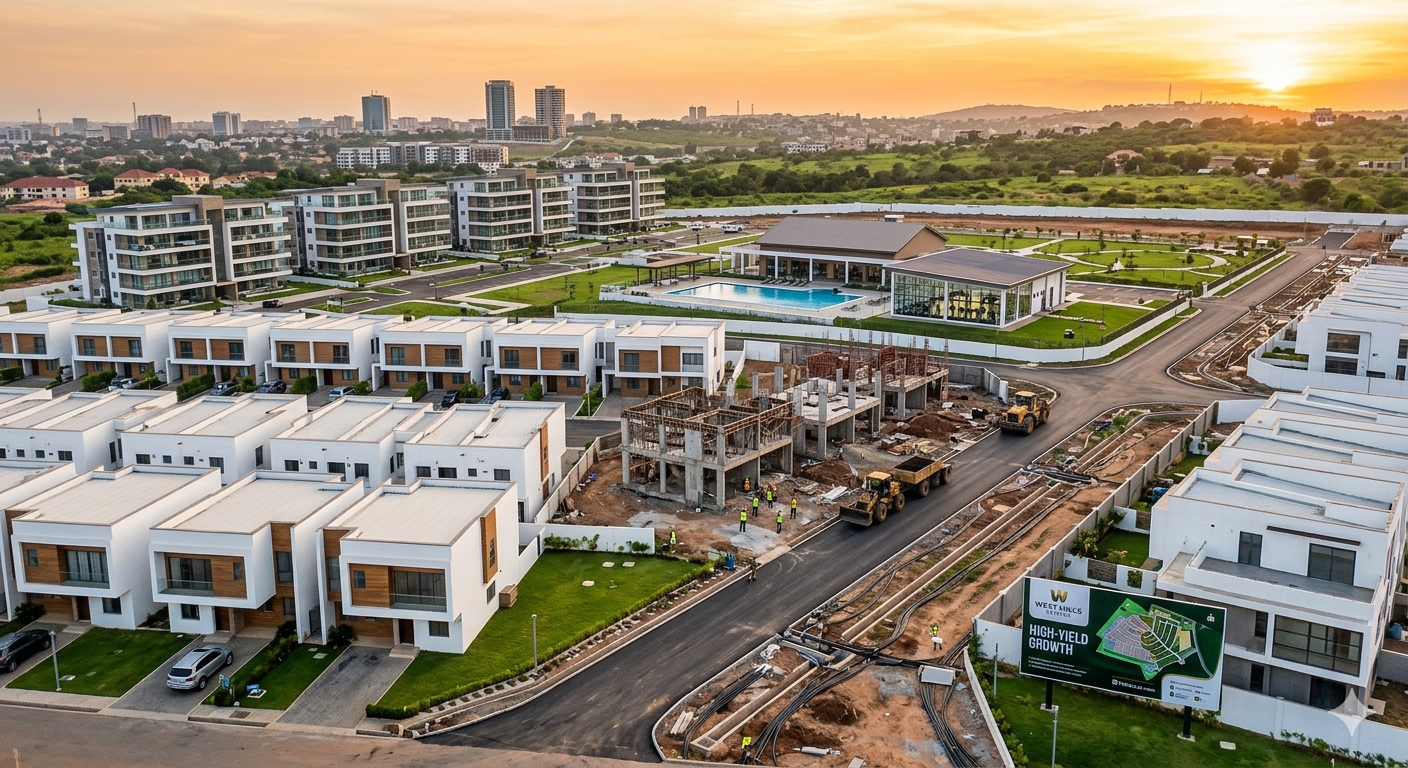
Why 2026 is the “Golden Window” for Ghana Real Estate: An Investor’s Guide
For years, the “Ghana Opportunity” was a whisper among savvy continental investors. Today, in 2026, it is a roar. With a cooling inflation rate (now stabilized around 6.3%) and a massive housing deficit of 1.8 million units, Ghana isn’t just a stable democracy—it’s a high-yield powerhouse for real estate capital.
If you are looking for a market where your dollar (or Cedi) works harder, here is why Ghana should be at the top of your 2026 portfolio. This is brough to you by Kumadoh Perspective Podcast
1. The Macro-Economic Rebound
Ghana has moved past the volatility of 2023. The IMF-supported recovery has restored market confidence, leading to:
- Lower Interest Rates: The Bank of Ghana recently cut policy rates to 18%, making mortgage financing more accessible than it has been in a decade.
- Currency Stability: The Cedi has found its footing, reducing the “exchange rate risk” that previously haunted foreign investors.
- GDP Growth: Projected at 4.8% to 5.8% for 2026, the economy is outperforming many of its regional peers.
2. Where the Yields are Hiding
Not all neighborhoods are created equal. In 2026, we are seeing a shift from “Legacy Luxury” to “High-Growth Suburbs.”
| Investment Type | Top Neighborhoods | Expected Rental Yield | Capital Appreciation |
| Short-Let / Airbnb | Osu, Cantonments, Labone | 12% – 15% | 5% – 7% |
| Corporate/Expat | Airport Residential, Ridge | 7% – 10% | 6% – 8% |
| Mid-Market Family | East Legon Hills, Tema Com. 25 | 8% – 10% | 10% – 15% |
| Emerging Growth | Weija-Gbawe, Oyibi, Adenta | 9% – 12% | 12% – 18% |
3. The Rise of “Managed Communities”
Investors are moving away from standalone houses toward gated, amenity-rich estates. Why? Because the modern Ghanaian tenant and the returning Diaspora demand three things: Security, 24/7 Power, and Lifestyle.
Developments like Eden Heights (near West Hills Mall) have become benchmarks. By offering on-site gyms, swimming pools, and professional facility management, these projects maintain 90%+ occupancy rates, even when the broader market fluctuates.
4. Legal Safeguards for Foreign Investors
One of the biggest myths is that foreigners can’t own property in Ghana. Here is the reality in 2026:
- Leasehold Ownership: Foreigners can legally acquire 50-year leaseholds, which are renewable.
- Digitalized Registration: The Land Act 2020 has finally borne fruit; title registrations that used to take years now often resolve in 30 to 60 working days.
- No Ownership Caps: Unlike some markets, there is no limit on the number of units a foreign entity or individual can own.
5. The “December in Ghana” Effect
Never underestimate the power of tourism. The “Beyond the Return” initiative has turned December into a goldmine. Owners of well-managed apartments in East Legon or Osu often make 30-40% of their annual revenue in just six weeks during the festive season, with nightly rates rivaling London or New York.
The Verdict
The “crisis premium” is gone, and the “stability era” has begun. For investors, the highest ROI is currently found in mid-market townhouses and serviced apartments in expansion corridors.
The strategy for 2026: Buy in the path of progress—where the roads are being paved today, the appreciation will be highest tomorrow.
Pro Tip: Always conduct a search at the Lands Commission before making a deposit. In Ghana, “Title is King.”
Are you looking to invest in Ghana this year? What is your biggest concern—property management or finding the right location?